5 Best Mobile Crypto Wallets for 2026: Security and Staking Compared
Navigating the 2026 landscape requires a mobile crypto wallet that balances uncompromising security with robust staking rewards. We evaluate the top five contenders, focusing on concrete features and official protocol support rather than abstract categories.
1. Trust Wallet: Best for multi-chain staking
Trust Wallet operates as a Swiss Army knife for diversified portfolios, supporting over 70 blockchains. Its built-in staking engine lets users earn yields on assets like Cosmos and Tron without leaving the app. This seamless integration makes it ideal for investors who want to grow holdings across multiple networks effortlessly.

2. MetaMask: Best for Ethereum and Web3 access
MetaMask remains the gateway to the Ethereum ecosystem, offering deep compatibility with decentralized applications. Its browser extension and mobile app provide a familiar interface for interacting with DeFi protocols and NFT marketplaces. Users gain direct control over their keys while accessing a vast library of Web3 services securely.
3. Exodus: Best interface for beginners
Exodus prioritizes intuitive design, making complex crypto management accessible to newcomers. Its clean dashboard visualizes portfolio performance with clear charts and real-time price updates. The integrated exchange feature allows for easy swaps between assets, reducing friction for users who want to manage diverse holdings without navigating multiple platforms.

4. Phantom: Best for Solana ecosystem
Phantom dominates the Solana landscape with lightning-fast transaction speeds and low fees. It offers a streamlined experience for staking SOL and interacting with Solana-based NFTs and DeFi apps. The wallet’s sleek design and robust security features make it the preferred choice for users deeply embedded in the Solana network.
5. Coinbase Wallet: Best for self-custody exchange users
Coinbase Wallet bridges the gap between centralized exchanges and self-custody, offering a familiar yet secure experience. It allows users to manage assets independently while retaining easy access to Coinbase’s fiat on-ramps. This hybrid approach is perfect for traders who want control over their keys without sacrificing convenience for buying and selling.
How we picked the best mobile crypto wallet 2026
Choosing a mobile crypto wallet in 2026 requires looking past marketing hype. We evaluated the top contenders based on three concrete pillars: security architecture, fee transparency, and daily usability. The goal is to find a wallet that keeps your assets safe without slowing down your transactions.
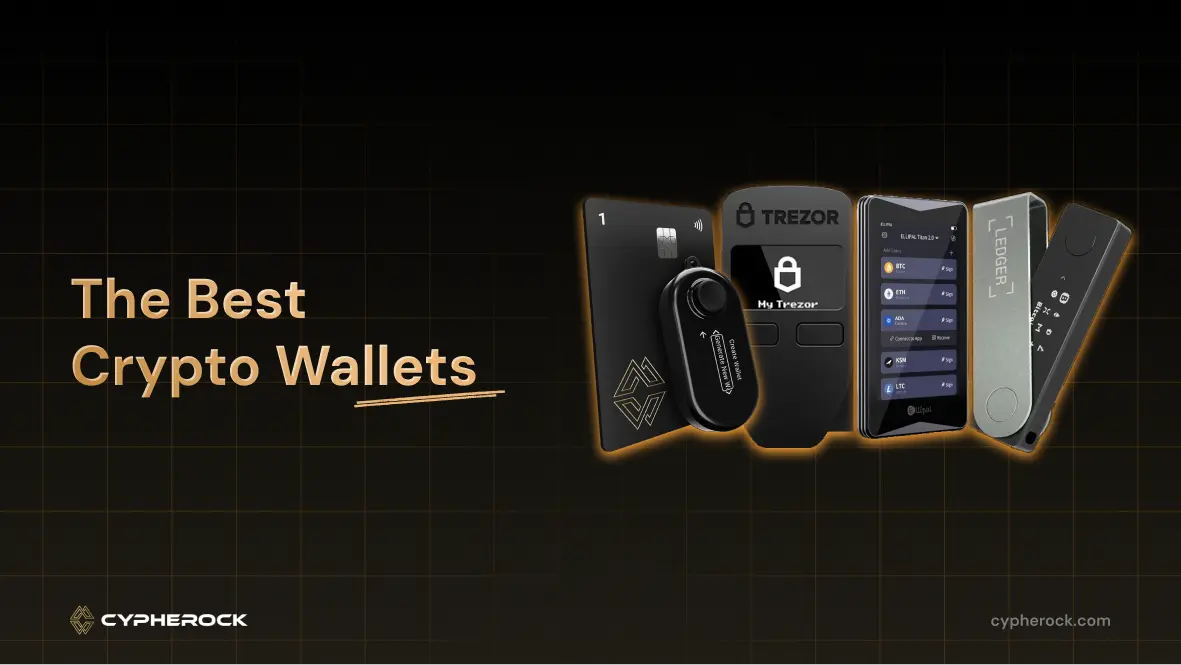
Security is the non-negotiable foundation. We prioritized wallets that offer true self-custody, meaning you hold the private keys. We looked for advanced features like biometric authentication and Multi-Party Computation (MPC) technology, which splits key generation across multiple devices to reduce single points of failure. Non-custodial options like MetaMask remain industry standards for user-controlled security, while others like Trust Wallet offer broad blockchain support with zero staking fees.
Beyond security, we examined the fee structures. A good wallet should not hide costs behind excessive network fees or hidden conversion spreads. We also tested usability on both iOS and Android, ensuring the interface is intuitive for sending, receiving, and staking crypto. The best wallets balance robust security with a smooth user experience, making it easy to manage your portfolio on the go.
Compare features and fees side by side
Choosing the right mobile crypto wallet often comes down to a trade-off between convenience and control. While some apps prioritize a sleek interface for casual traders, others focus on institutional-grade security for long-term holders. The five wallets below represent the current market leaders, each optimized for different use cases.
The table below compares the core capabilities of Trust Wallet, MetaMask, Exodus, Phantom, and Coinbase Wallet. We have focused on the metrics that matter most for security and staking, including the number of supported blockchains, the type of security architecture, and the fee structure for staking rewards.
| Wallet | Supported Chains | Security Type | Staking Fees |
|---|---|---|---|
| Trust Wallet | 100+ | Open-source, non-custodial | 0% fee |
| MetaMask | EVM-compatible | Non-custodial, seed phrase | Variable (protocol) |
| Exodus | 350+ | Non-custodial, local encryption | Variable (protocol) |
| Phantom | Solana, EVM, Polygon | Non-custodial, seed phrase | Variable (protocol) |
| Coinbase Wallet | EVM, Solana, Bitcoin | Non-custodial, seed phrase | Variable (protocol) |
Trust Wallet stands out for its breadth, supporting over 100 blockchains with zero fees on staking, making it ideal for diversification. MetaMask remains the standard for Ethereum ecosystem interactions, though its staking fees depend entirely on the underlying protocol. Exodus offers the widest asset coverage with 350+ chains, appealing to users who want a single interface for many different networks. Phantom dominates the Solana space while expanding into EVM chains, and Coinbase Wallet provides a familiar entry point for users already on the Coinbase exchange.


As an Amazon Associate, we may earn from qualifying purchases.
Secure your mobile crypto wallet in 2026
Mobile wallets offer convenience, but they are also the primary target for phishing attacks and malware. To protect your assets, you must treat your device as a high-value target. The following steps outline the essential security measures for any mobile crypto wallet in 2026.
Your recovery phrase is the only way to restore your funds if your phone is lost or stolen. Never store this phrase digitally. Do not take photos, save it in cloud notes, or email it to yourself. Write it down on paper and store it in a fireproof safe or a secure physical location. If anyone asks for this phrase, it is a scam.
Always turn on FaceID, TouchID, or fingerprint scanning within your wallet app. This adds a layer of security that prevents unauthorized access even if your phone is unlocked. Biometric locks ensure that only you can initiate transactions or view your private keys, significantly reducing the risk of theft from physical access.
Phishing remains the most common threat to mobile wallets. Only download wallets from official app stores or the developer’s verified website. Be wary of shortened links in emails or social media messages. Verify the URL before entering any credentials. If a site looks suspicious or asks for your seed phrase, close it immediately.
By following these steps, you can significantly reduce the risk of losing your crypto assets. Security is not a one-time setup but an ongoing habit. Stay vigilant and keep your software updated to protect against the latest threats.
No comments yet. Be the first to share your thoughts!