How we picked the best mobile wallets
Selecting a mobile crypto wallet in 2026 requires more than checking feature lists; it demands a rigorous audit of security architecture, fee structures, and user experience. We evaluated the top contenders—Trust Wallet, MetaMask, and Ledger—against strict criteria designed to protect high-stakes assets. Our methodology prioritizes non-custodial solutions where you retain full control of your private keys, ensuring true self-custody of your digital holdings.
Security was the primary filter. We examined how each wallet handles biometric authentication, seed phrase storage, and transaction signing. Trust Wallet’s support for over 100 blockchains and $0 staking fees was weighed against MetaMask’s deep DeFi integration and Ledger’s hardware-backed security. The goal was to identify wallets that minimize exposure to exchange risks while maintaining robust protection against phishing and malware.
Beyond security, we assessed usability and cost. A wallet must balance advanced features with intuitive navigation, especially for users managing complex portfolios. We analyzed transaction fees, staking rewards, and the seamless integration of decentralized finance (DeFi) protocols. Official documentation from Trust Wallet and MetaMask served as our primary sources for verifying feature claims and security updates, ensuring our recommendations are grounded in current, authoritative data rather than speculation.
Best overall mobile crypto wallet: Trust Wallet
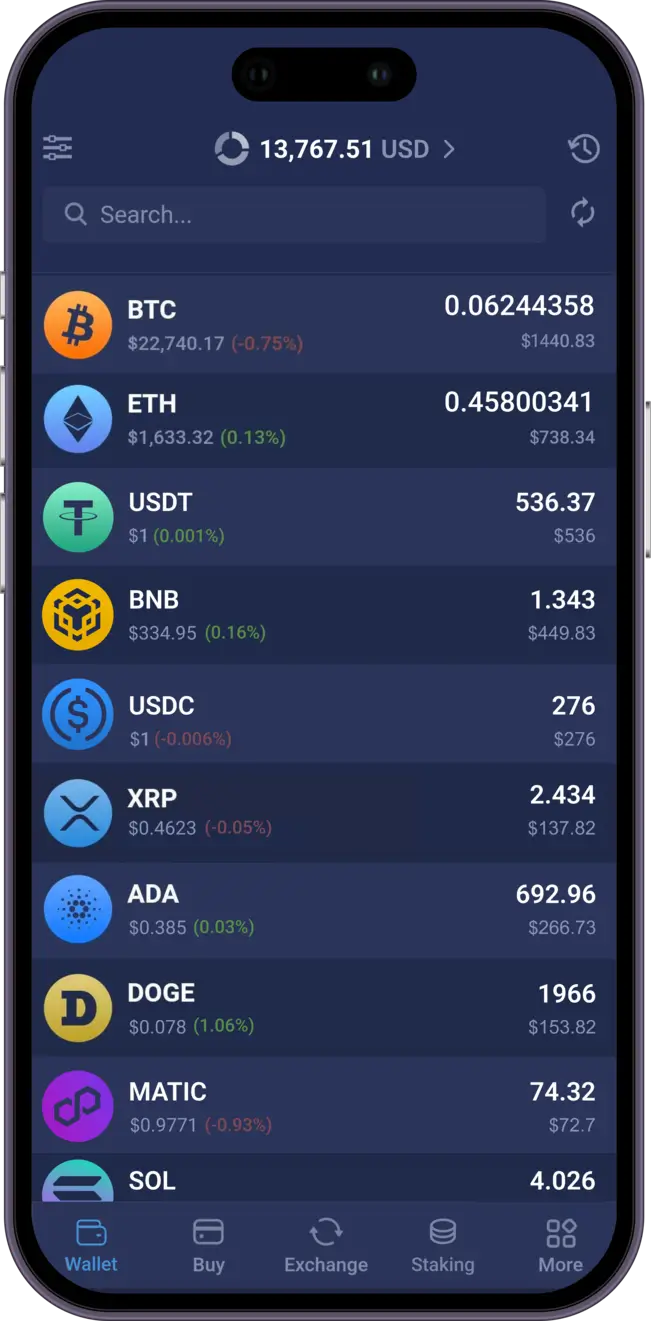
Trust Wallet stands as the top recommendation for general users seeking a balance of security, multi-chain support, and ease of use. As a non-custodial hot wallet, it places full control of private keys in your hands, a critical requirement for anyone serious about self-custody in 2026. With over 220 million users, it has established itself as a reliable entry point for managing a diverse portfolio across more than 100 blockchains.
The wallet’s architecture prioritizes security without sacrificing accessibility. It supports native staking with zero fees for many assets, allowing users to earn yield directly from their mobile devices. This feature is particularly valuable for those holding proof-of-stake coins, as it eliminates the need for complex external setups while maintaining the security of a non-custodial environment. Official documentation from Trust Wallet confirms its robust security protocols, including biometric authentication and encrypted local storage for your recovery phrase.
While hardware wallets like Ledger and Trezor offer superior protection for long-term holdings, Trust Wallet excels in daily utility. It integrates seamlessly with decentralized applications (dApps), enabling users to swap tokens, provide liquidity, and interact with DeFi protocols without leaving the app. This integration makes it a versatile tool for active traders and investors who need immediate access to their assets.
For those ready to secure their mobile setup with a physical backup, hardware wallets provide an additional layer of defense. Below are top-rated hardware and software wallet options available for purchase to complement your mobile strategy.


As an Amazon Associate, we may earn from qualifying purchases.
Best wallets for staking and passive income
Staking turns idle assets into yield, but the wallet you choose dictates your security posture and net returns. For self-custody investors, the priority is finding a non-custodial interface that handles validator selection without exposing private keys to third-party risks. Trust Wallet, MetaMask, and Ledger Live offer distinct approaches to this balance, catering to different asset preferences and fee tolerances.
Trust Wallet stands out for its breadth, supporting over 100 blockchains with zero staking fees on many networks. This fee structure is critical for maximizing yield on smaller positions. MetaMask remains the standard for Ethereum and EVM-compatible chains, offering a streamlined staking experience for ETH and tokens like SHIB, though it often routes through third-party providers that may take a cut. Ledger Live provides a hardware-secured layer for these operations, ensuring that staking transactions are signed on-device, which is the gold standard for securing significant holdings.
The following comparison breaks down the key metrics for these three leaders. We focus on supported chains, fee structures, and yield capabilities for major assets like SOL and ETH.
| Wallet | Major Chains | Staking Fees | Best For |
|---|---|---|---|
| Trust Wallet | SOL, BNB, ETH, TRX | 0% on most | Broad asset coverage |
| MetaMask | ETH, BSC, Polygon | Variable (provider) | EVM ecosystems |
| Ledger Live | ETH, SOL, ADA, DOT | Network fees only | Hardware security |
When selecting a wallet for passive income, verify that the staking mechanism allows for easy unstaking if market conditions shift. Trust Wallet’s direct validator integration often provides faster liquidity than MetaMask’s provider-based model. However, for significant holdings, the hardware isolation of Ledger Live offers protection against mobile malware that could otherwise drain staking rewards.
Best for DeFi and advanced trading
For traders managing complex positions, the mobile interface must function as a command center rather than a simple storage locker. The leading wallets in this category—MetaMask, Trust Wallet, and Ledger Live—prioritize self-custody while integrating direct access to decentralized exchanges (DEXs) and liquidity pools. This architecture allows you to execute swaps, provide liquidity, and interact with smart contracts without leaving the app.
MetaMask remains the standard for Ethereum and EVM-compatible chains, offering a built-in swap feature that aggregates liquidity across major DEXs like Uniswap and 1inch. Its interface provides detailed slippage tolerance settings and gas fee customization, which are essential for navigating volatile markets. Users can also bridge assets across chains directly within the wallet, reducing the friction of moving capital between networks.
Trust Wallet supports over 70 blockchains and features a built-in DApp browser that grants access to thousands of decentralized applications. This broad compatibility makes it a versatile choice for traders who operate across multiple ecosystems, from Solana to Cosmos. Meanwhile, Ledger Live bridges hardware security with DeFi accessibility, allowing users to sign transactions on their physical device while managing their portfolio on mobile. This combination ensures that high-stakes trading does not compromise the integrity of your private keys.
Best secure hardware wallets for mobile
Holding your own keys is the only way to guarantee true ownership, but carrying a physical device everywhere can be cumbersome. The best hardware wallets for mobile bridge this gap by pairing secure offline storage with convenient smartphone connectivity. These devices keep your private keys isolated from internet-connected threats while allowing you to sign transactions via NFC or Bluetooth.
Ledger Nano X
Ledger remains a top choice for mobile users who need broad compatibility. The Nano X connects to iOS and Android devices via Bluetooth, letting you manage assets through the Ledger Live app without plugging in a cable. It supports over 5,500 coins and integrates with major DeFi platforms, making it a versatile option for active traders. The device features a secure chip certified to high security standards, ensuring your keys remain protected even if your phone is compromised. Ledger Academy provides detailed guides on setting up and securing your device.
Trezor Model T
Trezor offers a premium experience with its touchscreen interface, which simplifies transaction verification on the device itself. The Model T connects to mobile devices via USB-C or Lightning, requiring a cable but offering a robust connection for signing large transactions. It is particularly strong for Bitcoin and Ethereum users, with deep integration into software like MetaMask and Trust Wallet. The open-source nature of Trezor allows for independent security audits, adding a layer of trust for long-term holders. According to the Bitcoin Foundation, Trezor is often recommended for its transparency and durability.
Tangem Wallet
For those prioritizing simplicity, Tangem removes the screen and buttons entirely. It looks like a credit card and connects to mobile phones via NFC, tapping the card to the back of your phone to sign transactions. This form factor is highly durable and water-resistant, making it ideal for daily use. Tangem supports multiple coins and allows users to carry up to five cards for backup. While it lacks a display for manual verification, the NFC handshake ensures that transactions are confirmed securely. Community discussions on Reddit frequently cite Tangem as a practical option for mobile-first users.


As an Amazon Associate, we may earn from qualifying purchases.
Mobile crypto wallet security checklist
Your phone is a high-value target. Hackers use malware, phishing, and SIM-swapping to drain hot wallets like Trust Wallet and MetaMask. Treat your private keys like physical cash: if you lose them or someone else sees them, the funds are gone forever. There is no customer support to reverse a blockchain transaction.
Use the following steps to harden your device and wallet settings before moving significant capital.
Lock your wallet app with FaceID or fingerprint. This prevents unauthorized access if your phone is stolen or left unlocked. Trust Wallet and MetaMask both support this native device security layer.
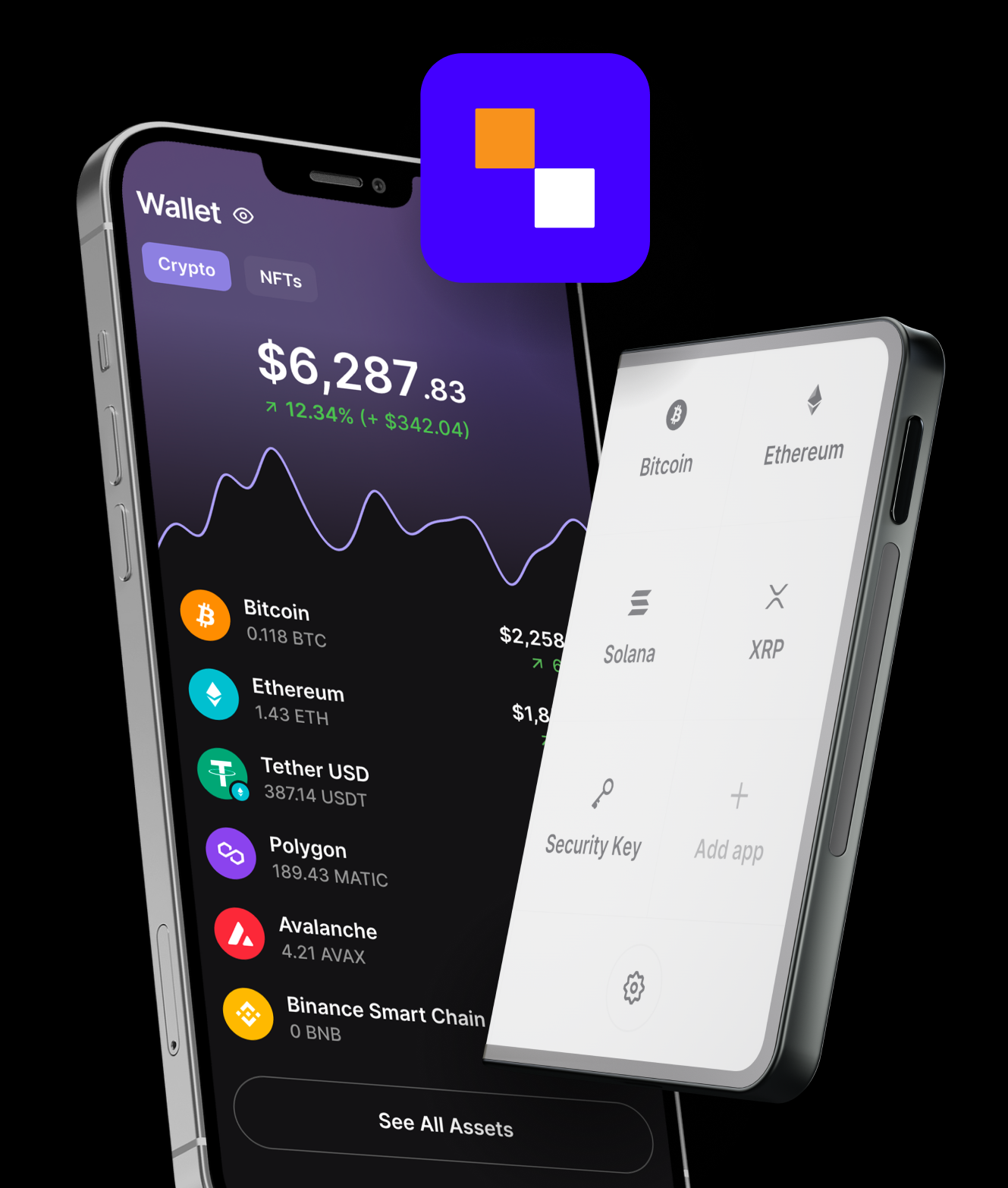
Write your 12- or 24-word seed phrase on paper or metal. Never store it digitally in photos, notes apps, or cloud backups. If your phone is compromised, digital storage is exposed. Keep the physical copy in a safe or safety deposit box.
Before interacting with new DeFi protocols, check your token allowances. Revoking unnecessary approvals limits how much a smart contract can drain from your wallet. Use official wallet interfaces or trusted block explorers to manage permissions.
Update your wallet app and mobile operating system immediately. Patches fix critical vulnerabilities that hackers exploit to bypass encryption. Auto-update settings should be enabled for both the OS and the wallet application.
Frequently asked questions about mobile wallets
Is Trust Wallet safe in 2026?
Trust Wallet remains a secure, non-custodial option for managing assets on mobile devices, provided you maintain strict self-custody practices. As a hot wallet, it connects to the blockchain, making it more exposed to digital threats than hardware solutions like Ledger. Security ultimately depends on your device hygiene: keep your phone’s operating system updated, enable biometric locks, and never share your 12-word recovery phrase. If you manage high-value portfolios, consider moving assets to a cold storage device for long-term holding, using Trust Wallet primarily for active trading and staking interactions.
Can the IRS see your crypto wallet?
The IRS does not directly monitor private wallets, but it can trace activity through centralized exchanges. If you have ever bought, sold, or swapped crypto on a US-regulated platform, that exchange is required to collect Know Your Customer (KYC) data and report transactions to the IRS. Blockchain analytics firms use these data points to link your identity to specific wallet addresses. Even if you transfer funds to a private wallet like MetaMask or Trust Wallet, the transaction history on the public ledger remains visible, creating a potential paper trail for tax authorities.
What is the next crypto to boom in 2026?
Market focus in 2026 is shifting toward high-throughput networks, with Solana emerging as a primary candidate for significant growth. Solana has consistently ranked among the top tokens by transaction volume, offering speed and low fees that attract both developers and retail users. The network is preparing for the Alpenglow consensus upgrade, which promises to further enhance security and decentralization. While Solana competes directly with Ethereum, its distinct architecture makes it a key alternative for mobile-first users who prioritize fast settlement times and low gas costs during trading.
No comments yet. Be the first to share your thoughts!