
Mobile AI agents replace manual trading
The era of desktop-bound crypto bots is ending. Traders are shifting to mobile AI agents that execute trades directly from smart contract wallets. This move removes the latency of manual intervention and the security risks of leaving private keys on a centralized exchange or desktop environment.
Smart contract wallets act as the execution layer. Instead of signing every transaction with a cold wallet or relying on a third-party custodian, these wallets use account abstraction to batch, verify, and execute trades on-chain. The AI agent analyzes market data, and the wallet handles the secure, on-device signing. This setup keeps assets in self-custody while automating the trading logic.
This shift is particularly relevant for volatile markets like Bitcoin, where speed and precision matter. A mobile AI agent can react to price movements faster than a human can physically access a desktop terminal. The agent operates continuously, adjusting positions based on real-time sentiment and technical indicators without requiring constant human oversight.
The result is a more resilient trading workflow. By combining mobile accessibility with smart contract security, traders can automate complex strategies while retaining full control over their assets. This approach minimizes the friction between market opportunity and execution.
Smart contract wallets enable secure automation
Smart contract wallets (SCWs) are the necessary infrastructure for AI trading on mobile. Unlike standard wallets that rely on single private keys, SCWs allow code to execute transactions. This shift is critical for AI agents, which need to interact with decentralized finance protocols without exposing the user’s main funds to risk.
Security and Session Keys
The primary advantage of SCWs is the use of session keys. A session key grants an AI agent limited permissions for a specific duration or task. If the AI is compromised, the damage is contained to the session parameters. This is far safer than handing over a full private key, which gives an attacker total control over the wallet.
Gas Abstraction
Mobile users often struggle with fragmented liquidity and complex gas management. SCWs support account abstraction, allowing the wallet to pay transaction fees in stablecoins or other tokens rather than just the native chain token. This simplifies the user experience, making AI-driven trades feel as seamless as traditional app interactions.
Integration with AI Agents
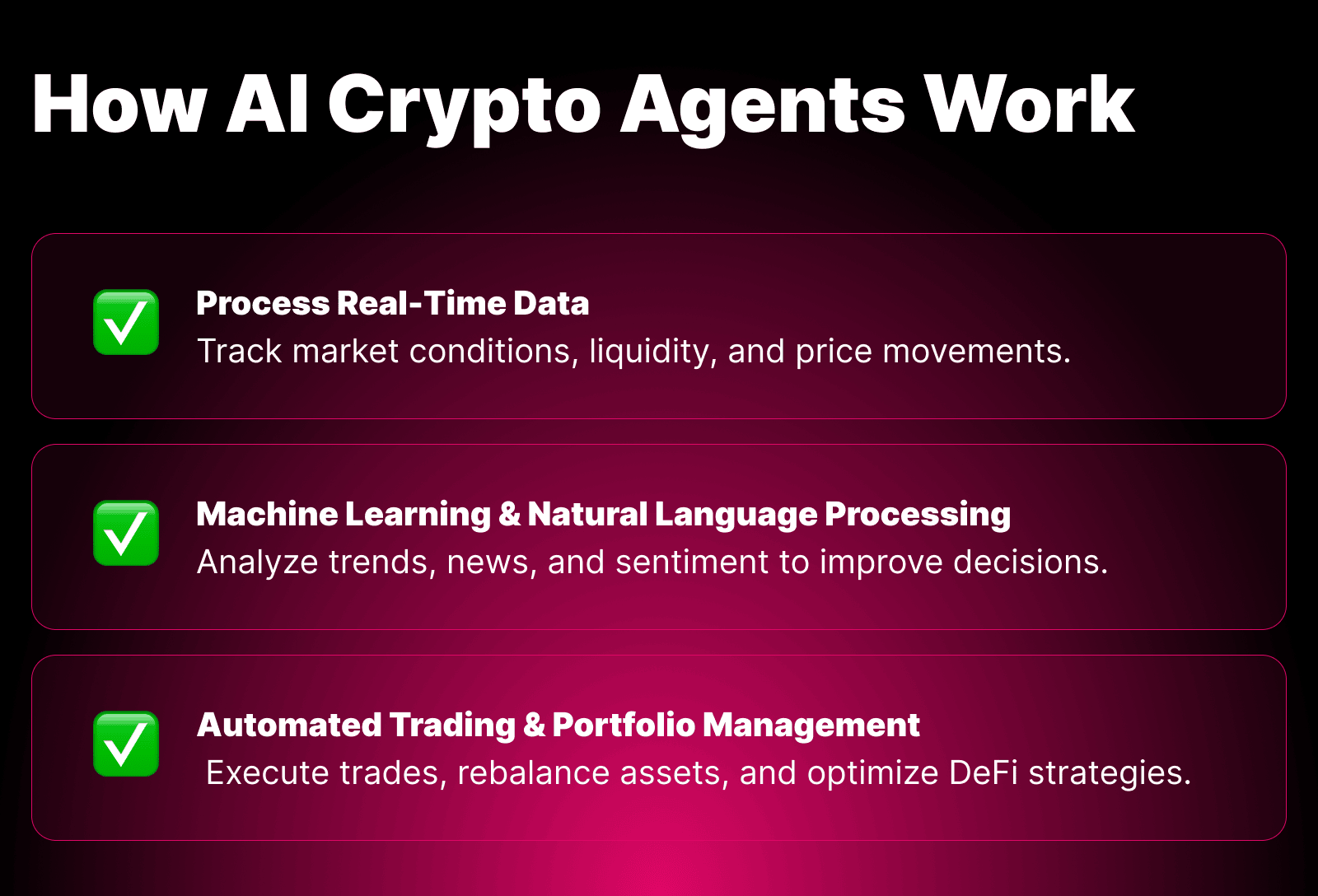
AI trading bots require direct, programmatic access to the blockchain. SCWs provide this access through smart contract logic. The AI can monitor market conditions and execute trades automatically, while the wallet structure ensures that every action is auditable and reversible within the session limits. This combination of automation and controlled security is what makes mobile AI trading viable in 2026.
Top AI trading platforms for mobile users
Choosing the right AI trading platform for mobile users comes down to three practical factors: ease of use, risk controls, and withdrawal flexibility. The best AI crypto trading bots in 2026 prioritize mobile-first interfaces, allowing traders to monitor and adjust automated strategies from anywhere. Since market volatility is constant, having a platform that balances user-friendly design with robust security is essential for long-term success.
The table below compares five leading platforms based on their mobile capabilities, AI strategy types, and fee structures. This comparison helps identify which platform aligns best with your trading style and risk tolerance.
| Platform | Mobile App | AI Strategy | Withdrawal | Fee Structure |
|---|---|---|---|---|
| 3Commas | Yes | Grid & DCA | Daily | Subscription |
| Pionex | Yes | 16 Built-in Bots | Daily | Low Trading Fees |
| Cryptohopper | Yes | Signal-Based | On-Demand | Subscription |
| Bitsgap | Yes | Grid Trading | On-Demand | Subscription |
| TradeSanta | Yes | Simple AI | Daily | Subscription |
When evaluating these options, consider how the AI strategy fits your goals. Platforms like Pionex offer built-in bots that require minimal setup, while Cryptohopper provides more advanced signal-based automation. Withdrawal flexibility is also critical; daily withdrawals offer greater liquidity control, whereas on-demand withdrawals may be sufficient for longer-term strategies. Fee structures vary, with some platforms charging subscription fees and others relying on lower trading fees, so calculate the total cost based on your expected trading volume.
Risk controls and strategy validation
AI agents executing trades on mobile devices must operate with tighter constraints than desktop counterparts. Without physical safeguards, a single algorithmic error or market spike can drain a wallet in seconds. Effective risk management isn't just about maximizing gains; it is about ensuring the agent survives the inevitable volatility of the crypto market.
Hard stop-losses and exposure limits
The first line of defense is the hard stop-loss. AI agents must enforce strict price thresholds that automatically liquidate positions when losses exceed a predefined percentage. This prevents emotional hesitation or connectivity lag from turning a minor dip into a catastrophic loss. Additionally, exposure limits cap the total capital allocated to any single asset or strategy, ensuring that no single trade can wipe out the entire portfolio.
Sentiment analysis filters
Technical indicators alone are insufficient in crypto markets, where news drives price action. AI agents should integrate real-time sentiment analysis filters that scan news outlets, social media, and regulatory announcements. If negative sentiment spikes, the agent can pause trading or reduce position sizes, acting as a circuit breaker against panic-driven sell-offs. This layer of context prevents the bot from buying into a collapsing narrative or selling during a temporary dip caused by misinformation.
Strategy validation before deployment
Before an AI agent goes live, it must undergo rigorous backtesting and paper trading. This validation phase uses historical data to simulate performance under various market conditions, including high volatility and low liquidity. Only after the strategy proves resilient in these simulations should it be deployed with real funds. This step is critical for identifying flaws in the logic that might only appear during extreme market events.
Which AI crypto projects lead in 2026
The landscape of AI crypto is shifting from speculative hype to infrastructure that actually processes data and executes trades. While many projects claim AI integration, the ones poised for significant growth in 2026 share a common trait: they provide the underlying compute or tokenization layer for autonomous agents. These are not just coins; they are the rails on which AI trading bots run.
Leading this charge is Bittensor (TAO), which operates as a decentralized network for machine learning. Rather than a single company training a model, TAO allows miners to contribute computing power and data, creating a marketplace for AI intelligence. This structure reduces reliance on centralized cloud providers and lowers the cost of training complex trading models.
NEAR Protocol (NEAR) is another critical player, bridging the gap between blockchain and AI through its "AI + Crypto" initiatives. NEAR’s high throughput and low fees make it ideal for AI agents that need to execute thousands of micro-transactions for data verification or automated trading strategies. Its sharded architecture allows these agents to operate without clogging the main network.
For those looking at live performance, these assets have shown resilience amid market volatility. The following widget tracks the current price action for TAO, one of the most established AI-specific tokens.
Other notable mentions include Render (RENDER), which provides the GPU power needed for rendering and AI processing, and Internet Computer (ICP), which aims to host smart contracts and AI models directly on the blockchain. While these projects serve slightly different niches, they all form the essential toolkit for the next generation of automated crypto trading.
No comments yet. Be the first to share your thoughts!